


I met Billy through a message on his Instagram account and it was incredible that he agreed to do a session with us from the first conversation. Born in Zurich, 29 years old, of which 20 years he has been giving a lot to this community, he opened the doors to his skateboarding. From the first time we met at Lettyramp we got along in conversations and subsequent extensive sessions and it was a real pleasure for us to meet a skater and artist with so much potential and above all with such positive energy. Billy is one of those people that you can’t stop asking questions, he always has something that surprises you and always has something to show.
Did you ever want to become a professional or make a living from skating?
No, I never wanted to become a professional. The main reason I skate has always been to have fun and discover new ways to express myself. For me, skating is a balance and a support in life, giving me a lot of stability. No matter how much shit happens in my life, I can always rely on my skateboard and the community. Being able to skate helps me get through tough times and crises.
What really made you not stop skating or not stop being involved in this community?
A lot of my friends have had serious injuries and stopped skating afterward. I realized, that if I keep going after such severe injuries, I become stronger, and that gives me a lot in return. In short, skating has helped me to never give up and stay persistent so I can realize and achieve my dreams and goals.
What I appreciate most about the skate community is the diversity and all the subcultures that come together and maintain a positive exchange with one another. I love the variety of people, styles, and tricks. Whether you’re a beginner or a pro, when someone lands their trick after trying and trying, it’s a huge celebration for the whole community, and that’s exactly what skateboarding is about for me. It’s about mutual support, appreciation, and respect. The community has taught me a lot, including how to have an open mindset towards new people and be generally open to new things and willing to try new challenges.
But the most important thing for me is always to have fun with whatever you’re doing, no matter what it is in the end. It’s about how you do something – you can make anything fun or, well, not!
For me, skating is a universal language that you share within, and even partially outside, a community. When you’re in a new place and meet other skaters, there’s immediately an unspoken, natural acceptance and appreciation for each other.
What are the pros and cons for you of skating or being a skater in Switzerland?
I’ll start with the advantages: in Switzerland, you have so many opportunities to skate. Whether it’s street skating or in skate parks, there’s everything you could dream of, and we also have one of the best flatgrounds in the world! In addition to that, every small village has its own skatepark, and the number of skateparks is immense. The community, however, is still easy to keep track of, and overall, it’s very well-connected.
Disadvantages: Fortunately, I haven’t had many, but I’ve encountered some people who had a dislike for skaters and were disturbed by the skating. A few times, the police were called, or some people tried everything to chase skaters off the spot. Once, a woman threw hot water from the 6th floor; luckily, no one was hit! I’ve
definitely felt some hostility from a small number of people, who just don’t understand the sport and view it as vandalism. It’s a shame, because they’ve clearly missed something and haven’t grasped the essence of skating!
“What I appreciate most about the skate community is the diversity and all the subcultures that come together and maintain a positive exchange with one another»
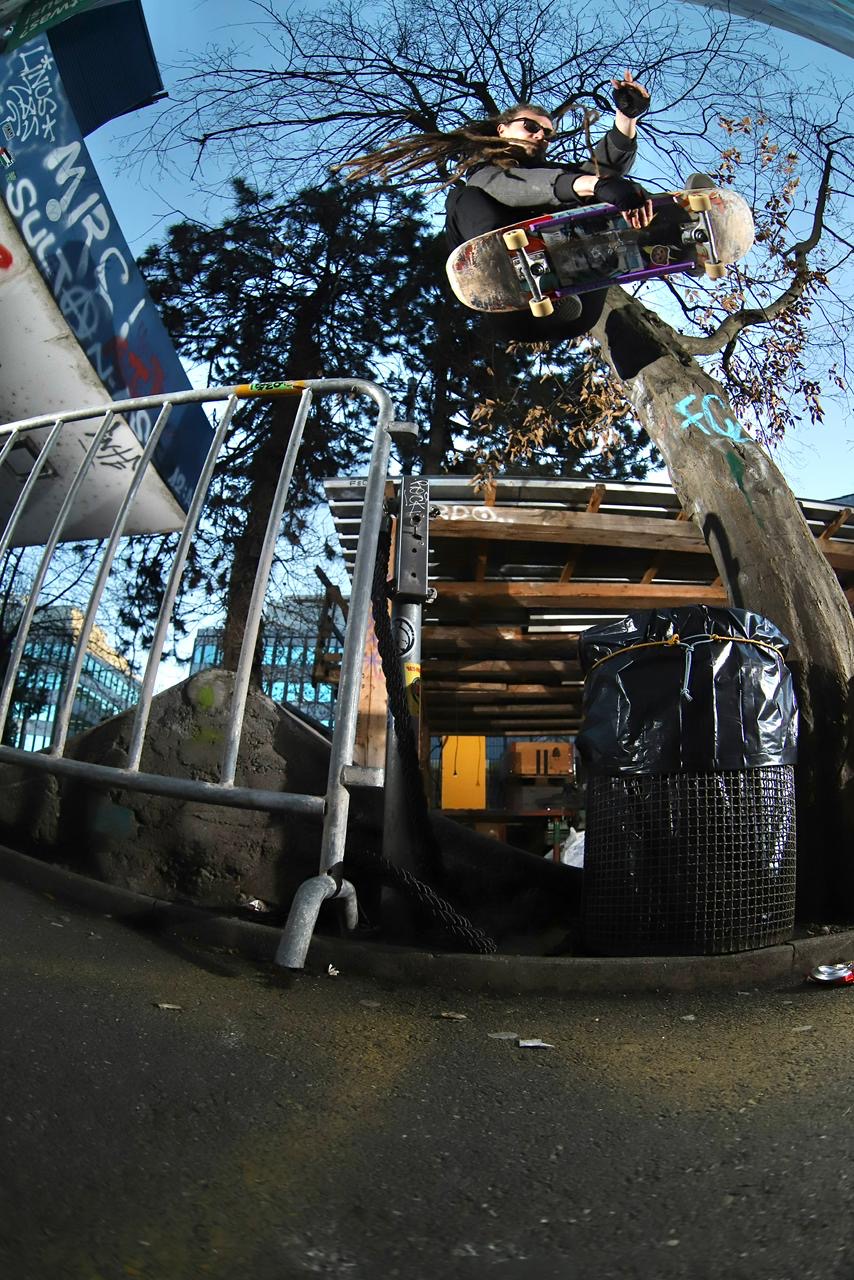 Indy grab at ZWZ DIY.
What country would you consider returning to skate at least once a year?
I would always go back to Spain, to Barcelona to be exact. Luckily, it’s not very far from Switzerland, and I’ve had beautiful experiences there. It’s basically the mecca for skateboarders, and therefore a massive playground for me. Barcelona definitely has that legendary status in the skate world, doesn’t it? The variety of spots, the vibe, and the sheer amount of skaters – it’s like a dream for anyone into the sport. I’ve been to Barcelona twice so far, and I still haven’t seen or skated everything. I think that would take longer than a lifetime…
What attracts you and what was your influence for freestyle?
What attracts me most are spots where at first you think: “Damn, how am I supposed to skate this?” Spots that push me out of my comfort zone and challenge me to try new tricks. Spots that aren’t entirely normal, that are unique and maybe a bit fucked up. I love it, when I have to rethink things, adjust my skills to the sport, which in the end leads to new creations.
Freestyle skateboarding is, for me, the origin of skateboarding. When you think about how many endless possibilities there are to perform tricks on flatground alone, it opens up an inexhaustible world of possibilities. Freestyle skateboarding shows me that there are no limits within the sport. I love the idea that you can do anything, and everything is possible. In short, freestyle skating is, for me, the endless possibility to express yourself. Freestyle skating opens all doors for all other types of skateboarding and makes all the impossibilities of skateboard art possible. If Freestyle skating were a music genre, it would definitely be jazz music.
You are a musician and a skater. At some point in your life did you have to sacrifice what you used to spend time skating in order to cultivate your new musical art?
No, on the contrary. Music and skating feed off each other – almost like they help balance each other out. When I make music, I often don’t move enough, which I can compensate for while skateboarding. For me, my two great passions complement each other and don’t get in each other’s way. One enriches the other, so it’s an inexhaustible combination for me. Both of these passions constantly open new worlds for me, and I haven’t seen the whole universe yet!
Was it difficult to evolve both arts?
No, it was a natural process. Both art forms progressed in parallel, and I got better at both. When I landed a new trick on the skateboard, it opened up a whole new world in music for me. When I had a musical success, it gave me the energy and joy to go skateboarding. That’s such an awesome dynamic! It’s like both passions are constantly fueling each other, creating a loop of inspiration. Really, It feels like both art forms nourish each other and complement each other perfectly.
Do you really consider a sponsor important to evolve in Skate? … How was that time for you when you had sponsorships and appeared in magazines?
No, not at all! I had a sponsor when I was 13 years old (No Way Skate Shop) and was able to ride for the brands “Fallen” and “Zero”. But I was never actively looking for a sponsor. Even that one I got at 13 was thanks to a friend, who recommended me at the shop. I feel like I’m more independent without a sponsor, and I can pursue what I really want, which is expressing myself through skateboarding and constantly discovering new combinations and tricks.
I was lucky with my sponsor because he never pressured me. I didn’t owe him anything, and I was always able to get shoes, skateboards, and clothes. I look back on that time very positively. Still, I was a bit too young to realize what was even happening back then. Now, I realize how cool that time was for me. I look back with pride at what I achieved in my early years, and I can’t help but smile and get a bit nostalgic when I see those pictures from back then in the magazines.
Do you have any appreciation for skateboarding in the USA?
The origins of skateboarding probably lie in the USA (California) in the 1940s. Back then, when surfers didn’t have good waves to ride, they could use a skateboard to imitate surfing. This is how the board came out of the water and, with the addition of trucks, four wheels, and eight bearings, it transformed into a skateboard. From the wave to the asphalt. The first skaters rode barefoot because that’s how they did it in surfing. At that time, everyone was looking for empty pools, because pool skating was the closest thing to surfing. The USA has definitely shaped skateboarding as we know it today, and there, we find the roots of skateboarding.
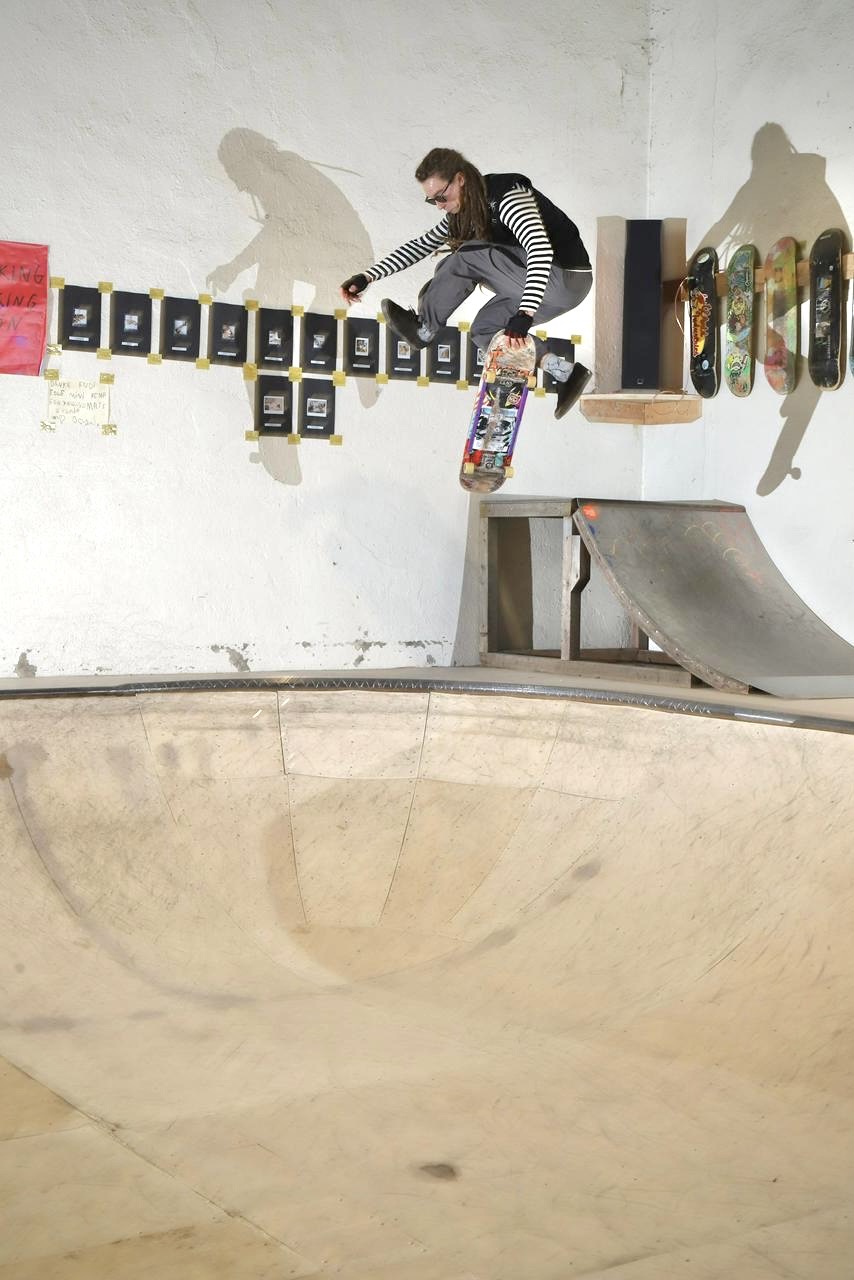 Caveman airwalk roll in at Lettyramp.
How did you start liking reggae?
One of my first live concerts was a reggae concert, so this genre has had a hold on me from an early age. Music has such a deep connection to my past and my passions! The moods that this music genre evokes have always fascinated me. When I joined “Breakfast Mood”, my reggaeband, I began to delve deeper into the style. I see many parallels between soul music and reggae music, and these two genres are the ones I particularly enjoy. Soul and reggae do have that same vibe of raw emotion and storytelling that I really dig!
You were recently in Italy, how was that experience in your musical career?
It was amazing and very enriching. An experienced Swiss reggae artist (Elijah Salomon) asked us to record an album with him. So, we combined brainstorming for the album with a holiday over New Year’s – what a great idea! In five days, we created seven songs, and we had an incredibly good time. After returning to Zurich, we went into the studio and recorded those seven songs in two days.
While we were in Italy, we were also interviewed on an Italian reggae radio station. The person who conducted the interview is one of the co-founders of the unique reggae festival “Rototom” and has hosted countless reggae artists from around the world. Last but not least, we appeared on the cover of the reggae magazine “Rastasnob”.
Life always has something new in store for us, to give and to learn. Do you have something planned that we can know about?
This year, I’ll turn 30, and my biggest wish is to record a soul album with my band. Reaching 30 feels like a perfect milestone for such a meaningful project.
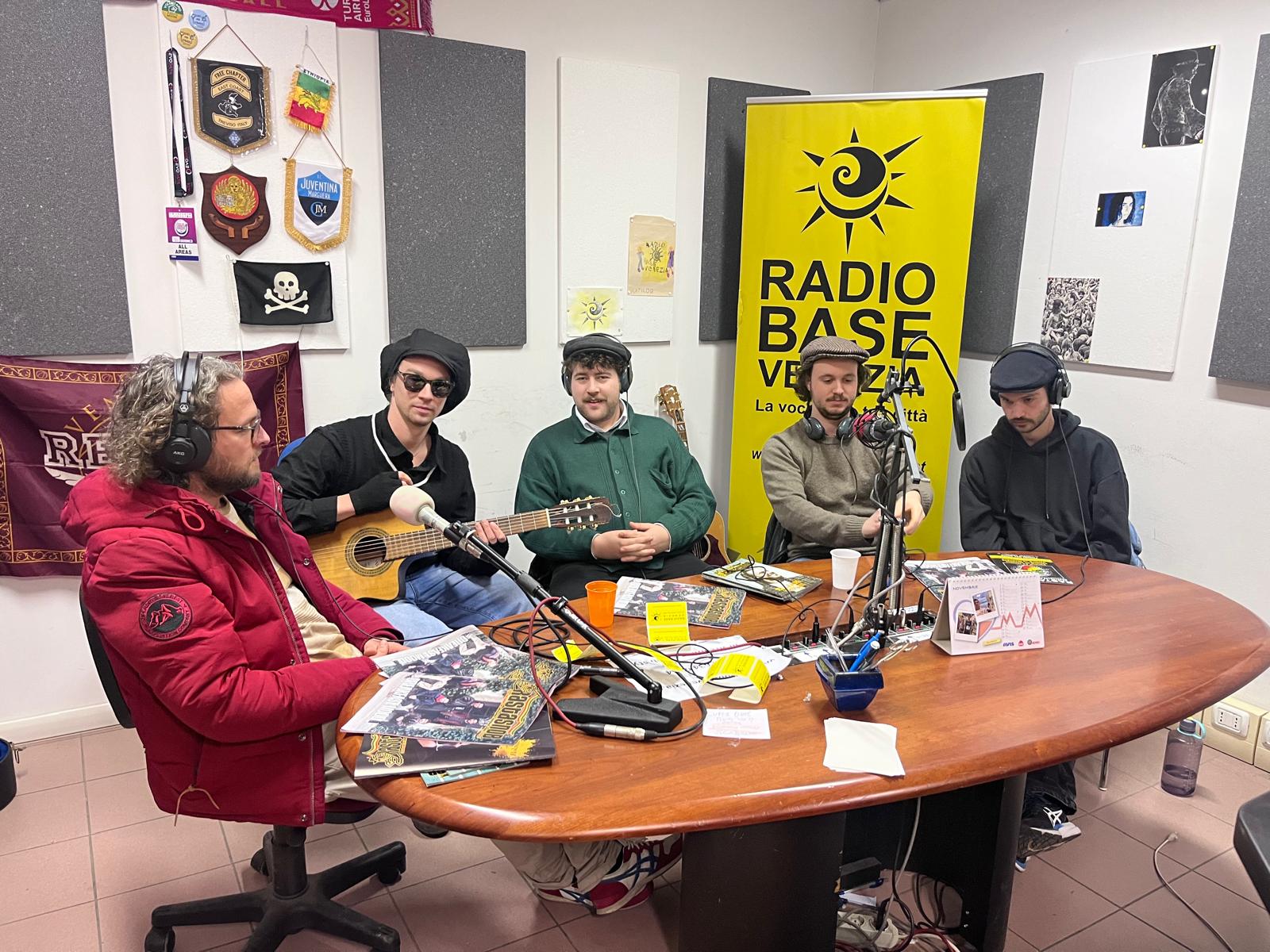 Breakfast Mood in a radio interview in Italy.
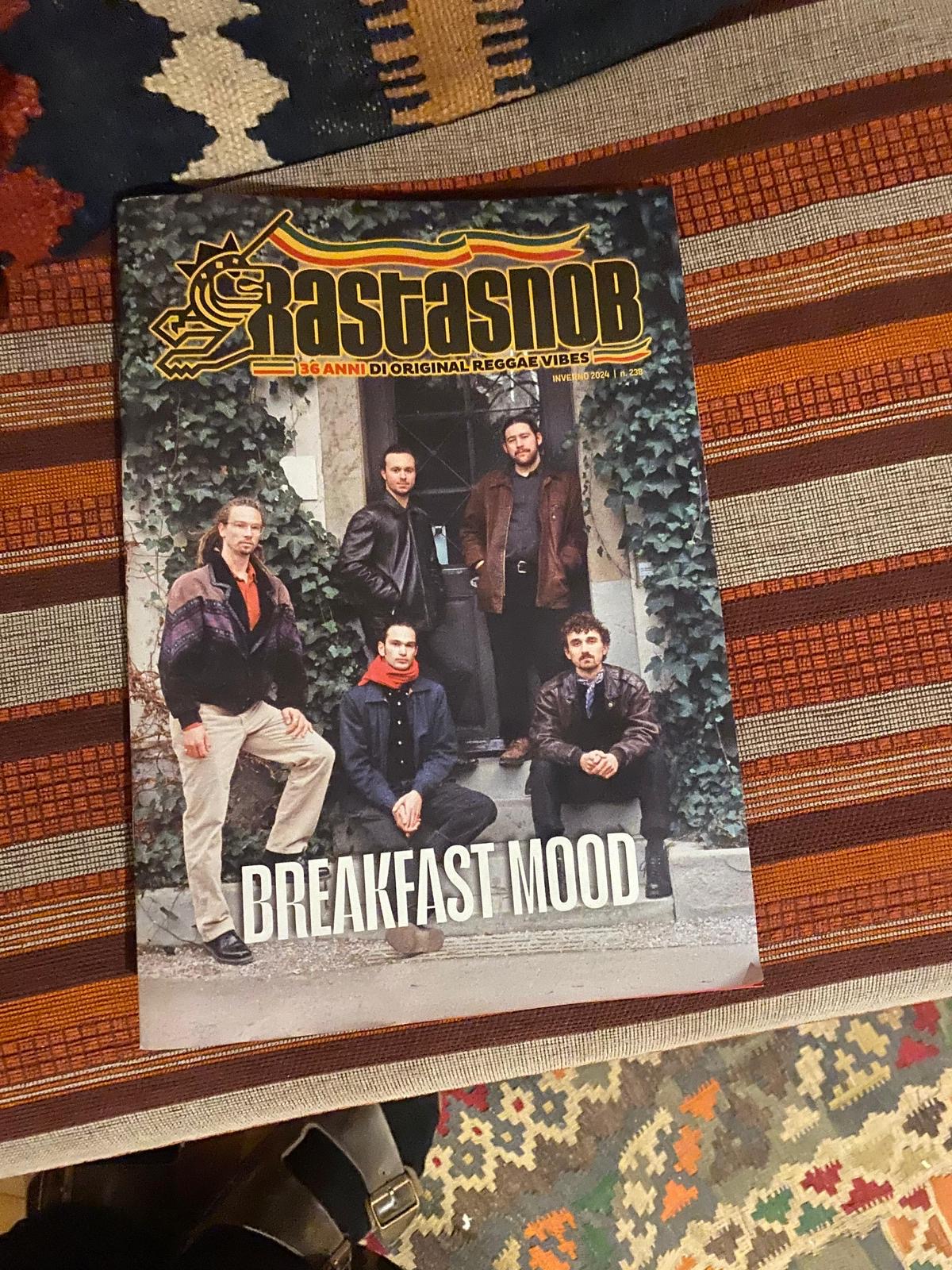 Breakfast mood at Rastasnob magazine cover.
Do you have an enviable musical culture, Did you have a musical education or information from childhood?
The biggest inspiration for making music was my father. He lived a life where he didn’t have much of a chance to make music. He collected many acoustic guitars from flea markets, remodeled them, and they would just lie around the house. So, as a child, I just picked up the guitar and started improvising. When I was young, I took a few years of guitar lessons, but I wasn’t fully satisfied, because my teacher only
showed me how to play other songs. I wanted to create my own music, to express myself through music! After taking those first guitar lessons, I became frustrated and took a two-year break, because I didn’t get what I was looking for. Then, I found a better mentor who helped me express myself through the guitar. A significant turning point was when I attended high school, because there, I received free guitar lessons, and my teacher opened many musical doors for me. I listened to a lot of jazz back then, and my teacher was able to connect with that and support me. Jazz is like the Latin of music genres and opened up endless possibilities for me.
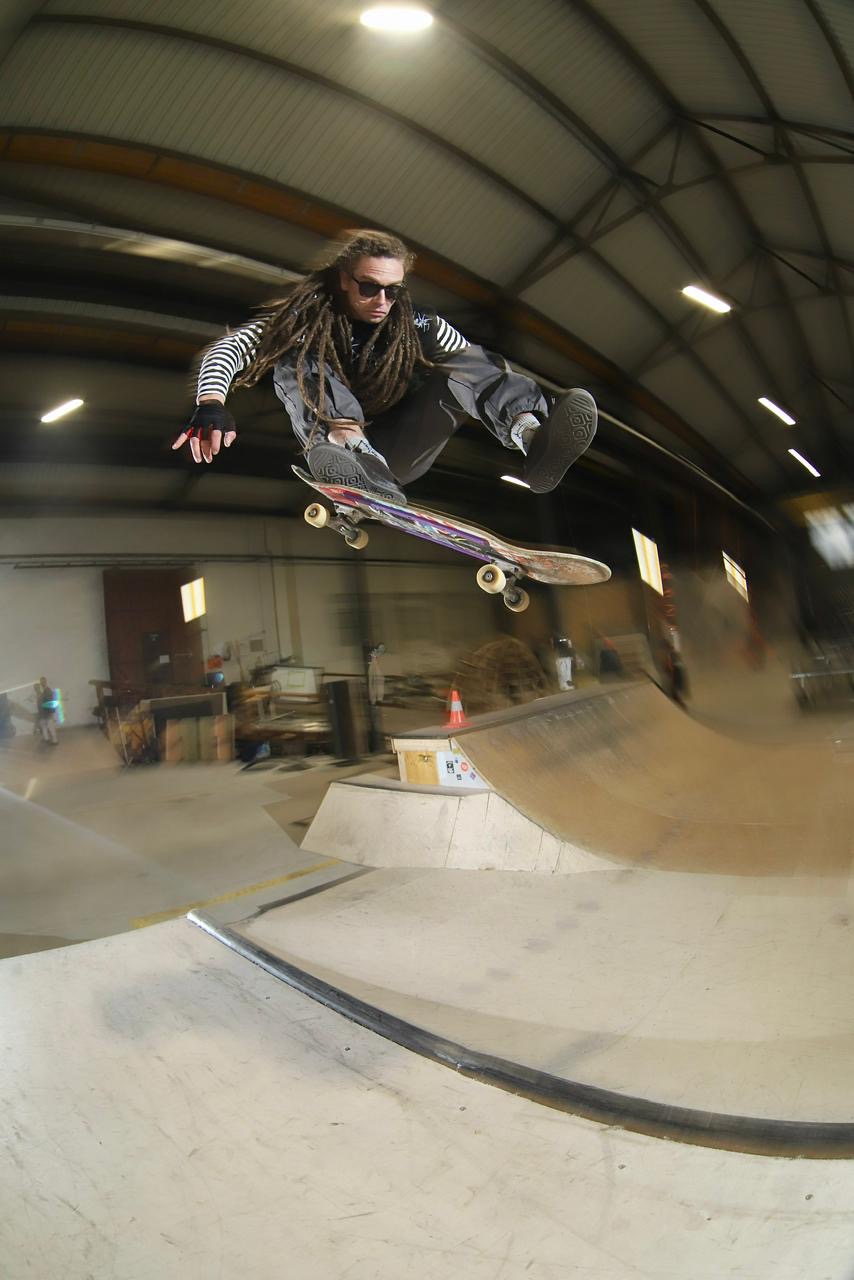 kickflip over hip at Lettyramp.
Besides being an artist and a skater, you are also a teacher. Is this something you always wanted or did it come with time?
That was definitely something that came with time. I didn’t see myself in the role of a teacher for a long time and had to figure out whether I was up to the challenge or not. Now I can say: I’m up to the challenge, and this profession is always a school for me as well. Teaching gives me so much in return and, in my eyes, it’s a very meaningful profession – as long as you do it with passion and love. The best thing about teaching is that the kids constantly remind me to look at the world with fresh eyes, to see the world again through a child’s perspective and perception. Every moment is new and fresh. It’s up to you to perceive it that way. From moment to moment, from trick to trick, it’s always the first time you experience that moment, even if it’s your thousandth kickflip. It’s still the kickflip you’re doing right now…
In just a few years you have accumulated skills that are difficult to cultivate, master and evolve. Is there anything you would like to add to the list of things you have been learning?
Well, what skateboarding has really taught me is how to take hits, get back up, fall again, get back up and keep going, always growing and moving forward. I feel, that after every fall, I get back up and come out stronger than before. The resilience and growth really capture the essence of what skateboarding teaches beyond just tricks and moves. This mindset – getting back up after every fall – has helped me in so many areas of life as well. But skateboarding is about so much more than just doing crazy tricks. Through skating, I’ve learned patience, self-expression, openness to the unknown, willingness to embrace the unknown, teamwork, joy of life, mutual support and motivation, and so much more! Skating has shaped me into the person I am today, and I owe a lot to skateboarding and the community. Thank You Skateboarding!
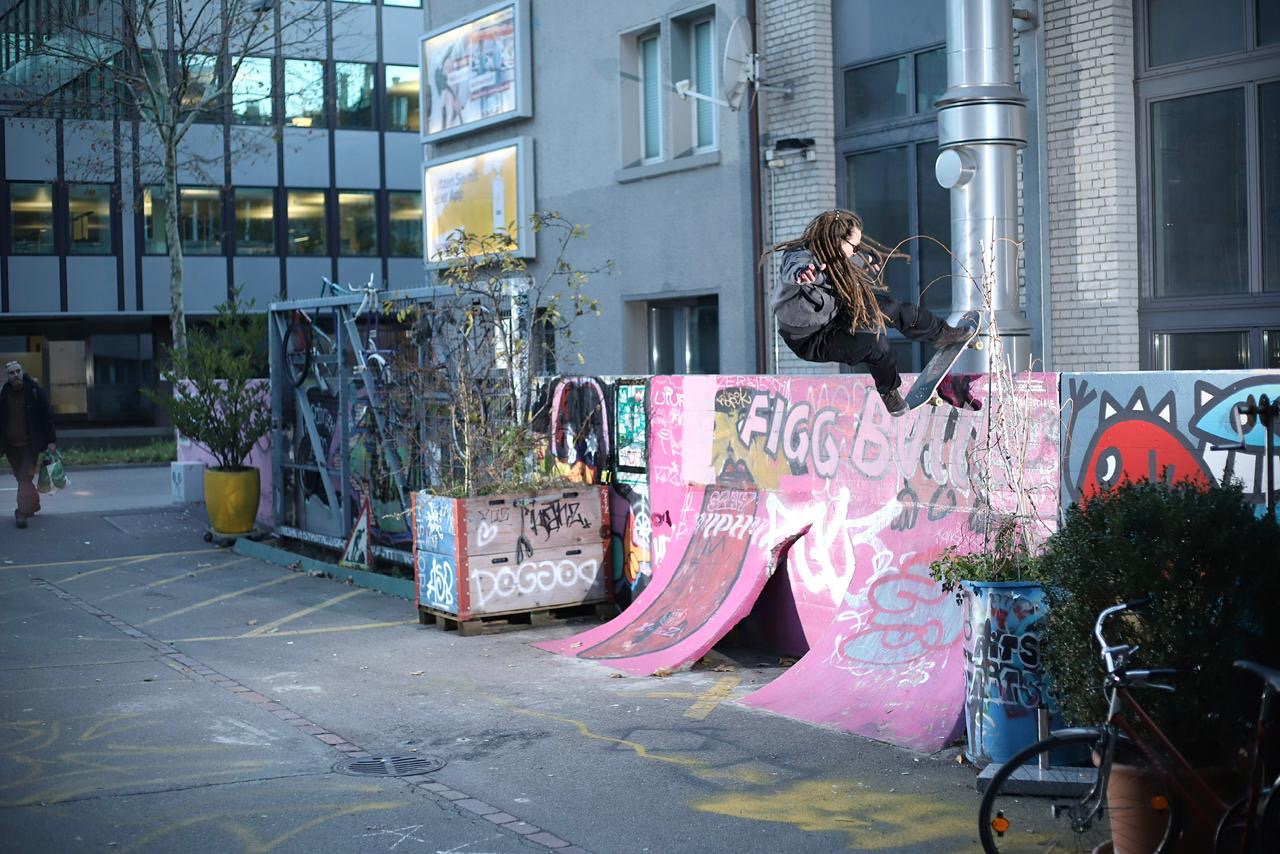 Rockn roll fakie at ZWZ DIY.
«The best thing about teaching is that the kids constantly remind me to look at the world with fresh eyes, to see the world again through a child’s perspective and perception.»
When we have gone out to sessions, everything flowed along the way without an exact plan. Was this always your way of producing something photographically or audiovisually?
Well, in terms of skateboarding, it’s always been like this: I feel an impulse, a direction that I should go in, but it allows for a great deal of freedom. This gives me
the freedom to perceive the moment as it is and respond and interact with the conditions set by space and time. In short, I can perceive the moment and the spot in all their facets and naturally react to them. For me, that’s the most natural way to perform the art of skateboarding and capture it photographically and visually.
In music, it can be similar. For example, during an improvised jamsession, you have to react to each other and to the space as well. But it’s different when recording in the studio; the songs are, in a sense, fully refined. When recording a whole song, I compare it a little to filming a line while skating. You have different tricks that you combine, just like there are different parts in music. A verse, a chorus, a bridge – each one is connected to create something beautiful and complete.
Both art forms help me get into a flow state. It’s like both require me to be fully present, adapting to the moment and the environment, but also knowing how to build something more structured over time.
Please mention me 5 skaters from Switzerland that, in addition to influencing you, you consider important for the scene in your country.
1. Sven Kilchenmann: Well, he’s definitely a Zurich skate legend. I don’t know anyone else who, at 42 years old, still skates full throttle every day and is constantly learning new tricks, capturing them on camera. I think Sven is one of the few skaters who can skate switch better than regular!
2. Sebastian Hepp: A huge style icon on four wheels, who transitioned from professional skater to lawyer. Sebo and Sven used to skate together a lot, celebrating and living out their passion for skating. Sebo also spent a lot of time in the USA. 2006, he was voted Swiss Skater of the Year.
3. Luc Kämpfen: Aside from being a talented skater who still skates, Luc has made a huge contribution to the Swiss skate scene. He’s filmed, edited, and cut pretty much all of the Zurich skate videos.
4. Guy Kämpfen: Luc’s brother was way ahead of many other skaters of his time in terms of skate skills. Back then, he rode for the brand “Darkstar” and appeared in countless skate videos. He’s also a co-founder of the Swiss skate brand “Safari”.
5. Kilian Zehnder: I spent many summers skating with Kili. He influenced me in a positive way with his skating style, trick selection, and positive vibes. Great Dude with a lot of Style and passion.
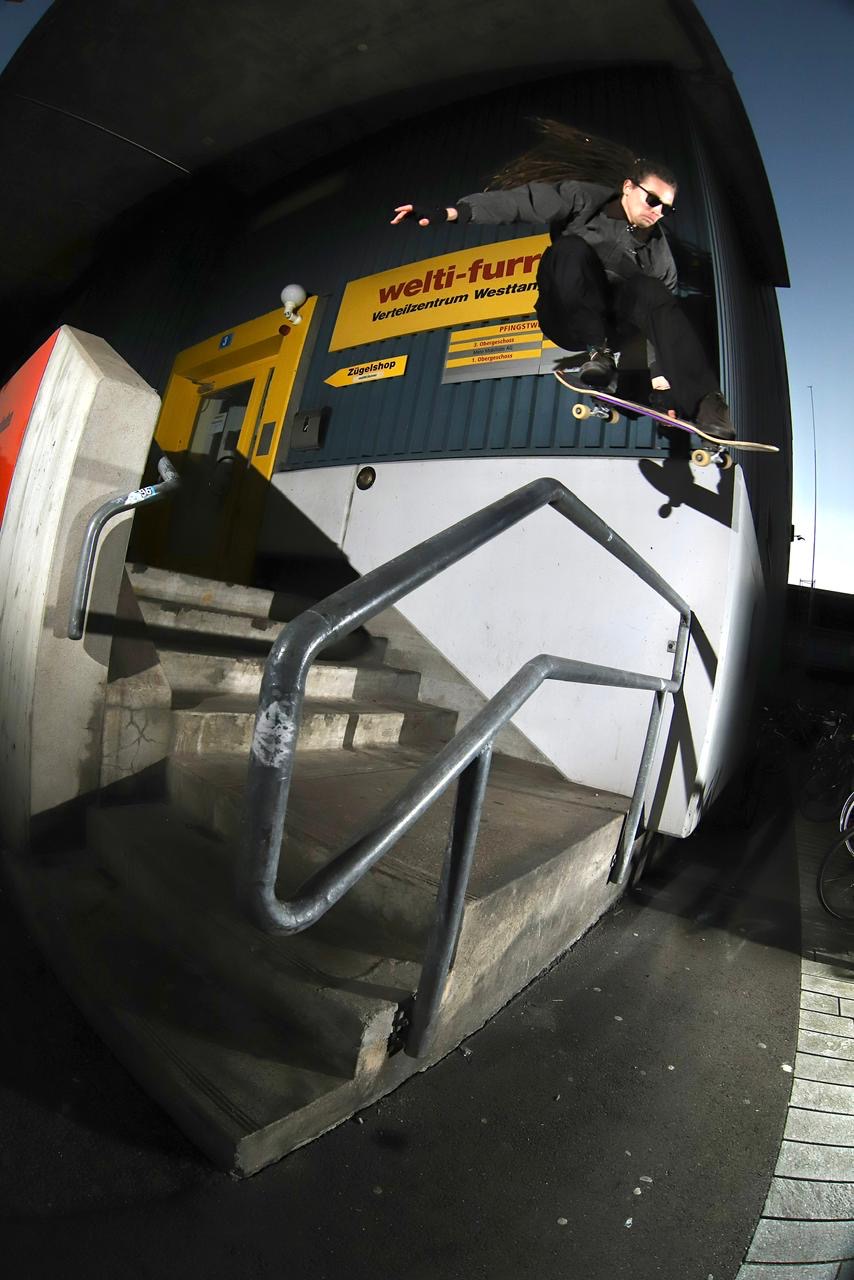 Melon ollie over gap at Hardbrücke.
Skateboarding is freedom but many times we have indirect challenges as well. Did you compete in some way with someone in your life? Do you remember at some point having had that feeling of “competition” with a particular skater?
Actually, not really. Even though I’ve participated in a few contests, for me, fun is always the center. It seems pointless to compare and compete with each other. Because, skateboarding, it’s like art – a big, individual matter of taste as to what you find aesthetically pleasing or great and what not. This leads to different perceptions of the same trick! Either something resonates with you, or it doesn’t.
Skateboarding is really all about personal expression and what feels right for me, not about outdoing others. I definitely emphasize the joy and individuality of skating over the competition. This mindset has influenced how I approach challenges, both in skating and in other areas of life.
A big thank you to Francisco, without him this interview wouldn’t have been possible! I’d also like to thank all of you readers for your time and interest. I’d like to leave you with the following: Follow your dreams, recognize and name them, and pursue them to the very last detail. Do what feels good to you, never give up and do it good – it’s worth it! May all your dreams come true!
Billy Valentin
Thanks Billy, I really appreciate your unconditional friendship, trust and good heart at all times. We moved to a new place and I hope you can visit us to have a drink and chat as always.